Plansmith Blog

Budgets & Board Approvals: Meet Tough Questions with Confident Answers

Posted by David Schwieder on 10/2/26, 6:45 AM

During budgeting season, management has two important responsibilities: developing a sound financial plan and helping the Board understand it well enough to evaluate and approve it.

That second responsibility can be easy to underestimate.

Directors aren't involved in every detail management considers while developing the budget. When it's time to present the plan, management has to turn weeks or even months of detailed financial work into information the Board can readily understand and use.

Read More

Why Every Financial Institution Should Budget for Multiple Scenarios

Posted by Jim Groark on 9/1/26, 7:08 AM

Annual budgeting has always required financial institutions to make educated assumptions about the future. Loan growth, deposit trends, funding costs, operating expenses, and other variables all shape the strategic decisions that guide an institution through the coming year.

What’s changed in recent years is the level of uncertainty surrounding those assumptions. Shifts in customer behavior, margin pressure, changing economic conditions, and evolving growth expectations have reinforced an important reality: a budget built around a single set of assumptions may not provide management with the flexibility it needs when conditions change.

Read More

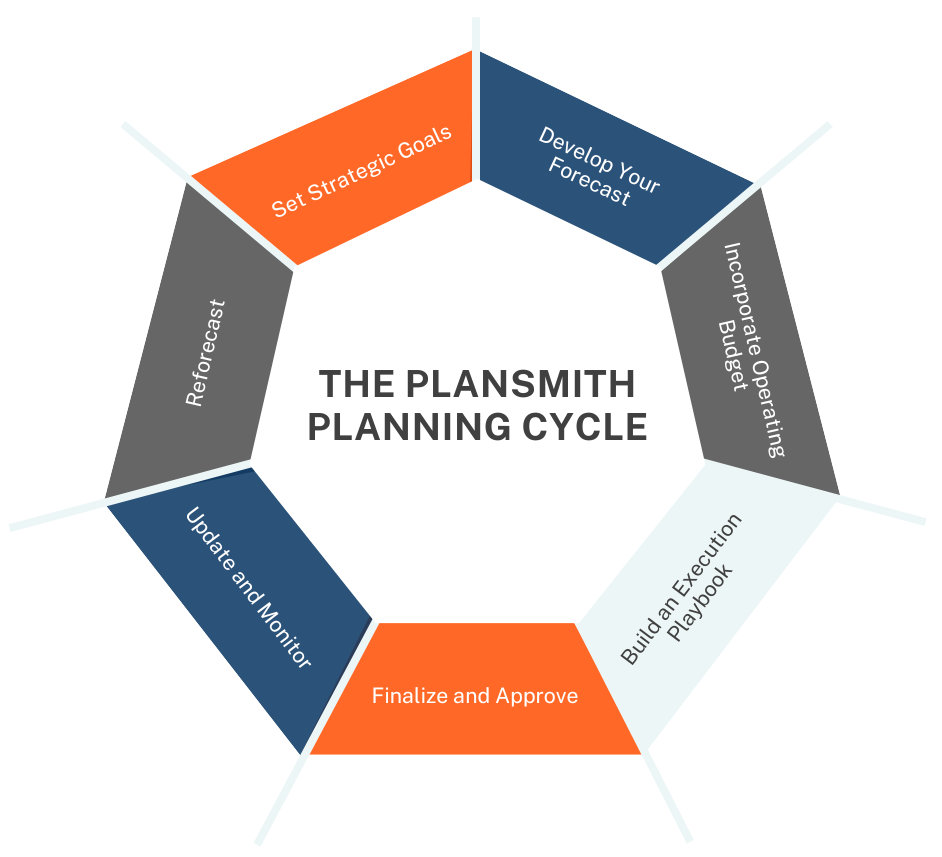
Blueprint for Success: The Plansmith Planning Cycle

Posted by Sue West on 8/3/26, 7:23 AM

After 40 years in this industry, I’ve seen the same pattern in too many boardrooms: planning treated as a static "check-the-box" exercise. In today’s volatile market, that is a liability.

Having worked with thousands of financial institutions, I’ve seen the full spectrum of planning processes. My own journey — from running our support department for years to serving as a hands-on budget and ALM model operator for our clients — has given me a front-row seat to the challenges you face. I’ve helped institutions prepare for everything from intense regulatory exams to high-stakes board presentations. Needless to say, I have seen exactly what works and what doesn't when it comes to effective planning.

Read More

Performance Today, Continuity Tomorrow: Can Your Team Sustain PTO, Turnover, and Retirement?

Posted by Megan Plis Mitchem on 7/6/26, 7:15 AM

There’s one topic I hear consistently come up in discussions amongst financial institution leaders: succession planning. Or, as I call it, The Succession Elephant – the awkward, looming, unsolved topic occupying space in boardrooms across the country. Leaders know turnover is happening. They know it’s an aggressive risk. Yet they often don’t know where to start tackling it.

This very topic was a core focus of my breakout session at the FMS Forum in New Orleans this past June. Because it's so critical – yet rarely nipped in the bud – I wanted to share a strategic framework for solving 'the succession elephant' before facing unexpected vacancies and their broader implications without a safety net in place.

Read More

5 Myths about Financial Institution Planning (And What to Do Instead)

Posted by Megan Plis Mitchem on 6/1/26, 7:30 AM

If we’re being honest, the annual planning season is rarely met with a standing ovation. For many financial institution leaders, it feels like a chore – a box to check for the regulators or a heavy document destined to collect dust on a shelf.

The problem is that many management teams are still operating under the old rules of planning. These misconceptions keep brilliant leaders buried in "spreadsheet land," where they spend their time managing data instead of managing the organization.

If you want to move from a static plan to a dynamic strategy, it is time to debunk these five common myths.

Read More

The 4Ds to Guide 2026: Deposits, Data, Decay, and Documentation

Posted by Dave Wicklund on 5/1/26, 8:15 AM

As we navigate 2026, the financial landscape continues to evolve at a breakneck pace. From my time as a Senior Examiner and Capital Markets Specialist, I've seen firsthand what separates institutions that thrive from those that merely survive. In 2026, financial leaders must prioritize what I’ll call the "4 Ds": Deposits, Data, Decay, and Documentation. This new order reflects the true hierarchy of risk and strategic necessity. Ignore these at your peril; master them, and you secure a competitive and regulatory advantage.

Read More

The Silent Cost: How Capacity Deficit Kills Opportunity

Posted by Megan Plis & Jenny Kane on 11/3/25, 11:03 AM

Planning for opportunities drives growth; preparing for challenges ensures survival. Despite lingering unknowns like tariffs, governmental tensions, and stubborn inflation, community bankers are entering 2026 with optimism. This positive outlook is supported by the ABA Economic Advisory Committee (2025), which expects modest economic gains in 2026, driven primarily by stronger consumer spending.

The question is: how can you leverage new opportunities while preparing for inevitable challenges?

Read More

From Plan to Profit: How to Conquer Execution Risk with a Strategic Playbook

Posted by Megan Plis on 10/2/25, 1:45 PM

You've spent countless hours crafting the perfect strategic plan – the one that will drive growth and secure your institution's future. But what happens when that brilliant strategy stalls, derails, or simply fades away due to resource limitations, miscommunication, or a lack of oversight?

That frustrating gap between a great idea and a successful outcome is what we call Execution Risk. 

For lean community banks and credit unions, this isn't just a threat; it's the single biggest obstacle to momentum – and success.

Read More

Planning: Many Aspects, One Purpose

Posted by Sue West on 7/17/23, 11:01 AM

I’m often asked, “What are the differences between a plan, a budget, forecasting, reforecasting, what-ifs, and stress testing?” Although some of the actions are similar and often intermingled in conversation, it’s their purpose that defines them. If you’re a client, most even involve similar keystrokes using your Plansmith software navigation; yet each plays a unique role within your organization’s total planning process. Let’s discuss.

Budget

To start, everyone’s familiar with a budget, but let’s make sure we see it for what it really is. A budget is a prediction or forecast of a financial position at a set time in the future, typically one year. A budget represents a desired financial outcome and requires consent by your board of directors. Most often a Budget is primarily thought of as cost allocations, but when combined with ideas regarding new business, you will often hear it referred to as a Plan. Once approved, the Budget Plan never changes. It is ‘set in stone’ for the duration of your selected time period.


Read More

Planning: Many Aspects, One Purpose

Posted by Sue West on 7/12/22, 2:41 PM

I’m often asked, “What are the differences between a plan, a budget, forecasting, reforecasting, what-ifs, and stress testing?” Although some of the actions are similar and often intermingled in conversation, it’s their purpose that defines them. If you’re a client, most even involve similar keystrokes using your Plansmith software navigation; yet each plays a unique role within your organization’s total planning process. Let’s discuss.

Budget

To start, everyone’s familiar with a budget, but let’s make sure we see it for what it really is. A budget is a prediction or forecast of a financial position at a set time in the future, typically one year. A budget represents a desired financial outcome and requires consent by your board of directors. Most often a Budget is primarily thought of as cost allocations, but when combined with ideas regarding new business, you will often hear it referred to as a Plan. Once approved, the Budget Plan never changes. It is ‘set in stone’ for the duration of your selected time period.

Read More

Subscribe Now!

Posts by Tag

See all

Recent Posts